Propolis
Also known as: Propolis extract, bee glue
Propolis is a resinous material bees use to seal their hive. In skincare it is soothing, antioxidant and antibacterial – great for glow and blemish-prone skin, but not for anyone allergic to bee products.
Contents
What is propolis?
Propolis – also called bee glue – is a sticky substance bees make from tree resins, wax and their saliva. They use it to seal the hive and protect it from bacteria and fungi. Propolis contains flavonoids and phenolic acids, among other things. In Korean skincare the extract is especially popular in honey-coloured toners, serums and ampoules.
How does propolis work on the skin?
- Soothing: propolis can calm redness and irritated skin.
- Antioxidant: its flavonoids help protect the skin from free radicals.
- Antibacterial: in the lab, propolis inhibits the growth of acne bacteria – which is why it is popular in care for blemish-prone skin.
- Glow and hydration: propolis products often have a light, honey-like texture that makes skin look plumper and more radiant.
Which skin types is propolis suitable for?
- blemish-prone skin – see skincare for acne & blemishes
- dry, dull skin that needs more glow – see glow skincare
- combination skin that needs soothing without feeling heavy
Important: propolis is a known contact allergen. If you react to bee products, pollen or balsam of Peru, avoid propolis. Always patch-test new products on a small area of skin first.
How to use propolis
- Pat a propolis toner or essence into the skin after cleansing.
- Apply a propolis serum or ampoule – morning and/or evening.
- Finish with a moisturiser, and sunscreen during the day.
What can you combine propolis with?
- Niacinamide for refined-looking skin and more glow – as in the Glow Serum by Beauty of Joseon
- Centella asiatica for extra soothing
- Hyaluronic acid for more hydration
- Panthenol for the skin barrier
Propolis in Korean skincare
Best known are the Glow Serum: Propolis + Niacinamide by Beauty of Joseon and COSRX’s Full Fit Propolis line with the Synergy Toner, Light Ampoule, Light Cream and Propolis Honey Overnight Mask. There is also iUNIK’s Propolis Vitamin Synergy Serum with propolis and vitamins.
What does the research say?
In lab studies, propolis is antibacterial, anti-inflammatory and antioxidant. In a small double-blind study, a cream with propolis, tea tree oil and aloe vera improved mild to moderate acne at least as well as a cream with the antibiotic erythromycin (Mazzarello et al., Clinical Pharmacology: Advances and Applications, 2018). Larger studies on propolis alone are still lacking.
Frequently asked questions
Is propolis good for spots?
Can I use propolis if I’m allergic to bees?
Is propolis suitable for sensitive skin?
Popular products
-
Glow Serum: Propolis + Niacinamide

 Vendor:Glow Serum: Propolis + NiacinamideBeauty of Joseon
- Regular price
-
From
CHF 10.62 - Sale price
-
From
CHF 10.62 - Translation missing: en.products.product.price.compare_at_price
-
instead of
CHF 14.20
-
Full Fit Propolis Synergy Toner

 Vendor:Full Fit Propolis Synergy TonerCOSRX
- Regular price
-
CHF 13.20 - Sale price
-
CHF 13.20 - Translation missing: en.products.product.price.compare_at_price
-
instead of
CHF 22.90
-
Full Fit Propolis Light Ampoule

 Vendor:Full Fit Propolis Light AmpouleCOSRX
- Regular price
-
CHF 19.01 - Sale price
-
CHF 19.01 - Translation missing: en.products.product.price.compare_at_price
-
instead of
CHF 25.50
-
Propolis Light Cream
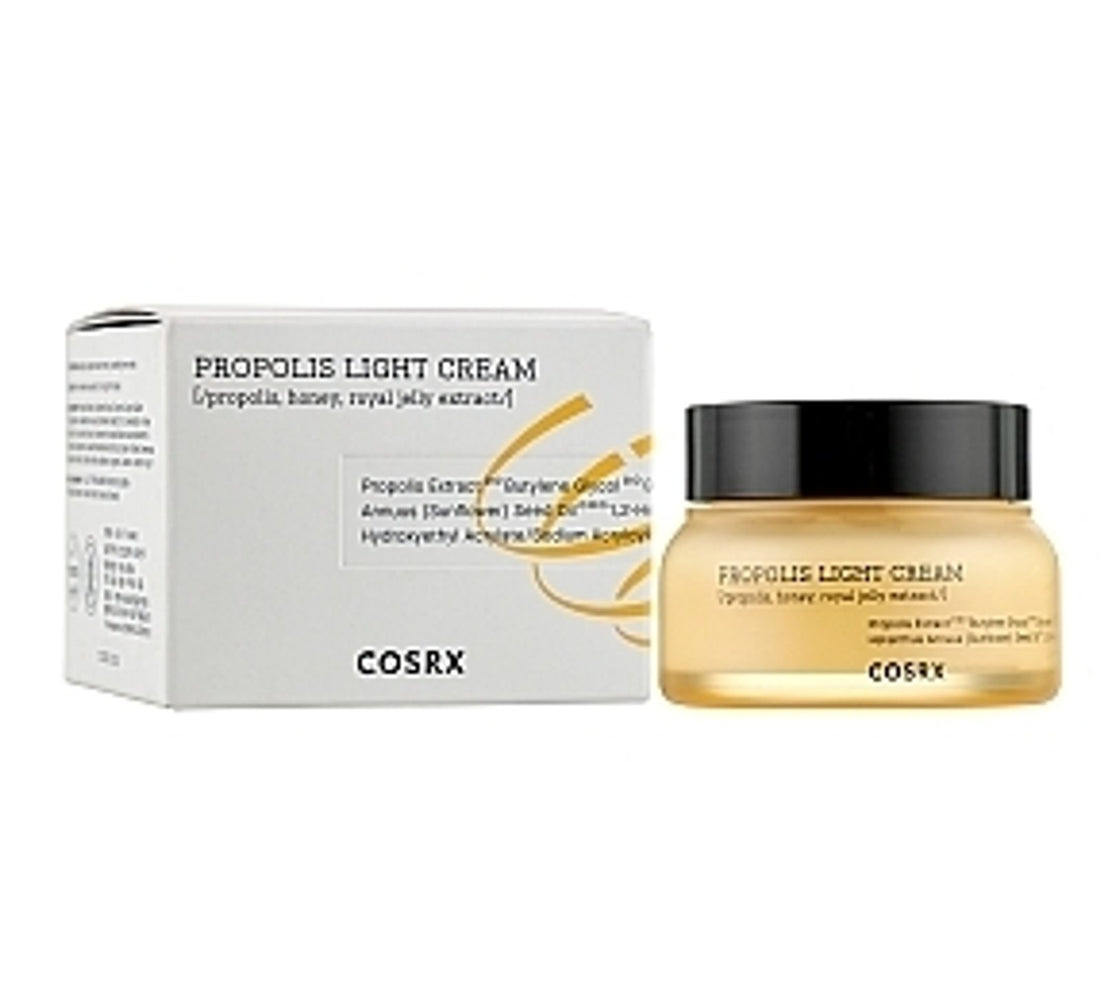
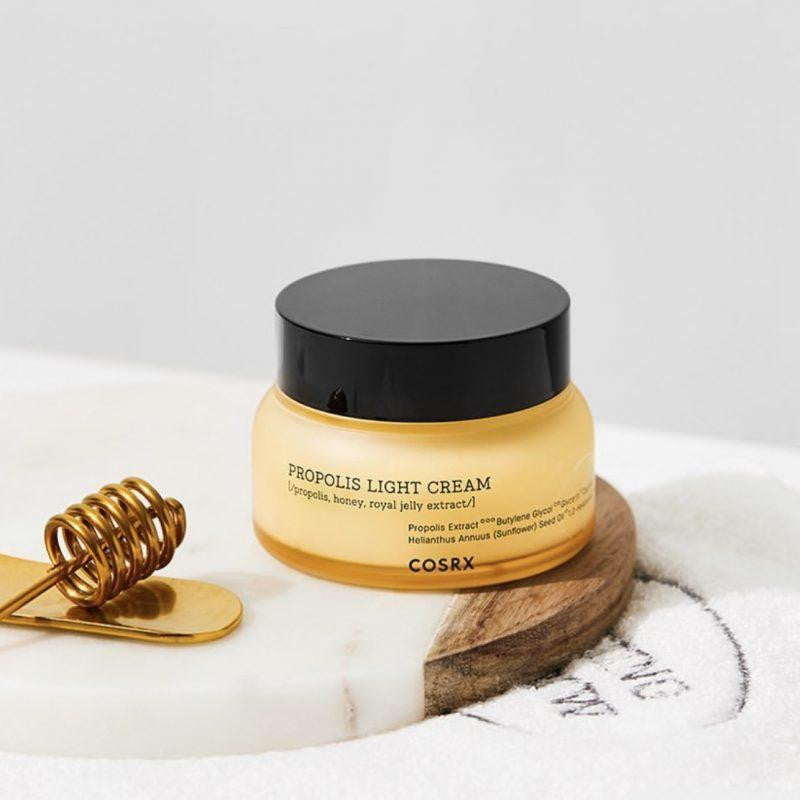 Vendor:Propolis Light CreamCOSRX
- Regular price
-
CHF 17.35 - Sale price
-
CHF 17.35 - Translation missing: en.products.product.price.compare_at_price
-
instead of
CHF 27.20
-
Propolis Honey Overnight Mask

 Vendor:Propolis Honey Overnight MaskCOSRX
- Regular price
-
CHF 17.35 - Sale price
-
CHF 17.35 - Translation missing: en.products.product.price.compare_at_price
-
instead of
CHF 27.20
-
Propolis Vitamin Synergy Serum

 Vendor:Propolis Vitamin Synergy SerumiUNIK
- Regular price
-
CHF 12.04 - Sale price
-
CHF 12.04 - Translation missing: en.products.product.price.compare_at_price
-
instead of
CHF 18.90


See also
- Tea Tree OilTea tree oil is extracted from the leaves of the Australian tea tree. It has antibacterial and anti-inflamm...→
- NiacinamideNiacinamide is a form of vitamin B3 and one of the most versatile skincare ingredients. It refines pores, r...→
- Centella AsiaticaCentella Asiatica, known in Korea as “cica”, is a medicinal plant from Asia. In skincare it calms red, irri...→
- PanthenolPanthenol is the precursor of vitamin B5. It hydrates, calms irritated skin and supports the regeneration o...→