Kojic Acid
Also known as: Kojic acid, koji acid, 5-hydroxy-2-hydroxymethyl-4-pyrone
Kojic acid is produced when rice is fermented with the koji mould – the same one used to make sake and soy sauce. It inhibits the enzyme tyrosinase, slowing down melanin production and brightening dark spots, post-acne marks and a dull complexion.
Contents
What is kojic acid?
Kojic acid is a natural active that forms when the mould Aspergillus oryzae – known in Japan and Korea as koji – ferments rice. The same mould has been used for centuries to make sake, soy sauce and miso. Legend has it that brewers were noticed for their especially fair, soft hands. Kojic acid has been used in skincare against dark spots since the 1980s.
How does kojic acid work?
To produce melanin, the skin needs the enzyme tyrosinase, which requires copper as a building block. Kojic acid binds this copper and so slows down tyrosinase. Less melanin means:
- Lighter dark spots and sun spots
- Faster-fading post-acne marks
- A more even, radiant complexion
Kojic acid also has mild antioxidant and antimicrobial effects.
How well tolerated is kojic acid?
Kojic acid is effective but can irritate sensitive skin or, in rare cases, cause a contact allergy. So:
- In facial products, concentrations of around 1% are common and considered safe.
- Patch test a new product on a small area first.
- If you get redness, stinging or itching, reduce use or stop.
- Use sunscreen every day – otherwise UV rays work against the active.
How to combine kojic acid
- Good: with niacinamide, tranexamic acid, alpha arbutin or vitamin C. They inhibit pigment production at other points and reinforce each other.
- Careful: with strong AHA exfoliants or retinol on the same evening – that can overwhelm the skin.
Kojic acid is a great building block in any routine for dark spots.
Kojic acid in Korean skincare
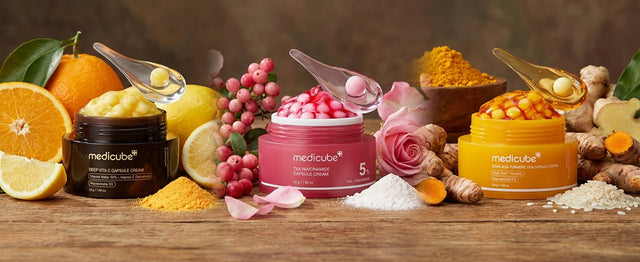
Especially well known is medicube’s Kojic Acid Turmeric line, which combines kojic acid with turmeric and niacinamide – as a serum, toner, pads and capsule cream. Also from our range: the Dark Spot Brightening Serum and the Radiant Tone Correcting Cream by KOJI WHITE, the Kojic Acid Niacinamide Radiance Soothing Gel Cleanser by SUNGBOON EDITOR and the Glutathione Kojic Acid Eye Patches by Abib. You’ll find all products in our kojic acid skincare collection.
What does the research say?
In a split-face study with melasma patients, the side of the face that additionally received 2% kojic acid improved more than the comparison side (Lim, Dermatologic Surgery, 1999). The EU Scientific Committee on Consumer Safety (SCCS) considers kojic acid safe at up to 1% in face and hand care (2022).
Frequently asked questions
How quickly does kojic acid work?
Can I use kojic acid in the morning?
Is kojic acid suitable for sensitive skin?
What’s the difference between kojic acid and alpha arbutin?
Popular products
-
Kojic Acid Turmeric Niacinamide Serum

 Vendor:Kojic Acid Turmeric Niacinamide Serummedicube
- Regular price
-
CHF 15.69 - Sale price
-
CHF 15.69 - Translation missing: en.products.product.price.compare_at_price
-
instead of
CHF 24.90
-
Kojic Acid Turmeric Resurfacing Toner

 Vendor:Kojic Acid Turmeric Resurfacing Tonermedicube
- Regular price
-
CHF 15.69 - Sale price
-
CHF 15.69 - Translation missing: en.products.product.price.compare_at_price
-
instead of
CHF 24.90
-
Kojic Acid Turmeric Pad

 Vendor:Kojic Acid Turmeric Padmedicube
- Regular price
-
CHF 19.84 - Sale price
-
CHF 19.84 - Translation missing: en.products.product.price.compare_at_price
-
instead of
CHF 24.90
-
Kojic Acid Turmeric Vita Capsule Cream

 Vendor:Kojic Acid Turmeric Vita Capsule Creammedicube
- Regular price
-
CHF 22.33 - Sale price
-
CHF 22.33 - Translation missing: en.products.product.price.compare_at_price
-
instead of
CHF 29.90
-
KOJI WHITE Dark Spot Brightening Serum

 Vendor:KOJI WHITE Dark Spot Brightening SerumKoji White
- Regular price
-
CHF 16.52 - Sale price
-
CHF 16.52 - Translation missing: en.products.product.price.compare_at_price
-
instead of
CHF 25.90
-
KOJI WHITE Radiant Tone Correcting Cream

 Vendor:KOJI WHITE Radiant Tone Correcting CreamKoji White
- Regular price
-
CHF 19.01 - Sale price
-
CHF 19.01 - Translation missing: en.products.product.price.compare_at_price
-
instead of
CHF 29.80
-
Kojic Acid Niacinamide Radiance Soothing Gel Cleanser

 Vendor:Kojic Acid Niacinamide Radiance Soothing Gel CleanserSUNGBOON EDITOR
- Regular price
-
CHF 16.52 - Sale price
-
CHF 16.52 - Translation missing: en.products.product.price.compare_at_price
-
instead of
CHF 25.90
-
Glutathione Kojic Acid Eye Patch Vita Jelly

 Vendor:Glutathione Kojic Acid Eye Patch Vita JellyAbib
- Regular price
-
CHF 19.01 - Sale price
-
CHF 19.01 - Translation missing: en.products.product.price.compare_at_price
-
instead of
CHF 29.80


Read more on our blog
See also
- Dark SpotsDark spots are areas where the skin has produced too much melanin – because of sun, hormones or after infla...→
- Alpha ArbutinAlpha arbutin is a brightening active for dark spots and post-acne marks. It slows down tyrosinase, the enz...→
- Tranexamic AcidTranexamic acid (TXA) is an active ingredient for dark spots, melasma and post-acne marks. It slows down th...→
- NiacinamideNiacinamide is a form of vitamin B3 and one of the most versatile skincare ingredients. It refines pores, r...→
- Vitamin CVitamin C is a powerful antioxidant that protects the skin from free radicals, fades dark spots and support...→
Kojic Acid in your routine
Discover all 43 products in «Korean skincare with Kojic acid» – 100% authentic, shipped from Lucerne.